The Complete Guide to Ceiling Painting in Connecticut
Ceilings usually go unnoticed until something draws your eye upward. A room can have freshly painted walls and updated trim, but a yellowed ceiling, brown water ring, or old popcorn texture can still make the space feel unfinished. The change often happens slowly. A ceiling may yellow evenly over 10 to 15 years, so it is easy to miss until a light fixture comes down or furniture is moved and a bright white patch shows what the ceiling used to look like.
Ceiling painting is about more than adding a new coat of paint. Discoloration, water stains, smoke residue, grease, and texture all affect how the surface needs to be prepared. The right approach depends on what caused the problem in the first place.
Why Your Ceiling Looks Older Than the Rest of the Room
One common reason ceilings turn yellow is older oil-based paint. As it ages, oil-based paint can oxidize and shift color. The yellowing is often more noticeable in areas with less natural light, such as hallways, closets, north-facing rooms, or spaces where furniture blocked the ceiling for years. Many older Connecticut homes still have original ceiling coatings under later paint layers, so this kind of discoloration is not unusual.
Kitchens have their own issues. Cooking grease moves through the air, settles on the ceiling, and slowly forms a yellow-brown film. Homeowners often think the paint itself has gone bad, but the issue is usually residue sitting on the surface. This is more common above the range, near the hood, or in kitchens where the hood does not vent outside.
Smoke and soot can also change the ceiling color. Fireplaces, wood stoves, candles, and nicotine leave deposits that can carry odor as well as staining. In some rooms, heating and cooling systems can leave darker streaks near vents or along framing lines where dust collects. That pattern is sometimes called ghosting.
The key point is that discoloration is usually not just old paint. It is often contamination on or in the surface. Washing can help in some cases, but repainting without the right primer can allow the yellowing or staining to come back through the new finish.
Water Stains on the Ceiling: What the Color Tells You
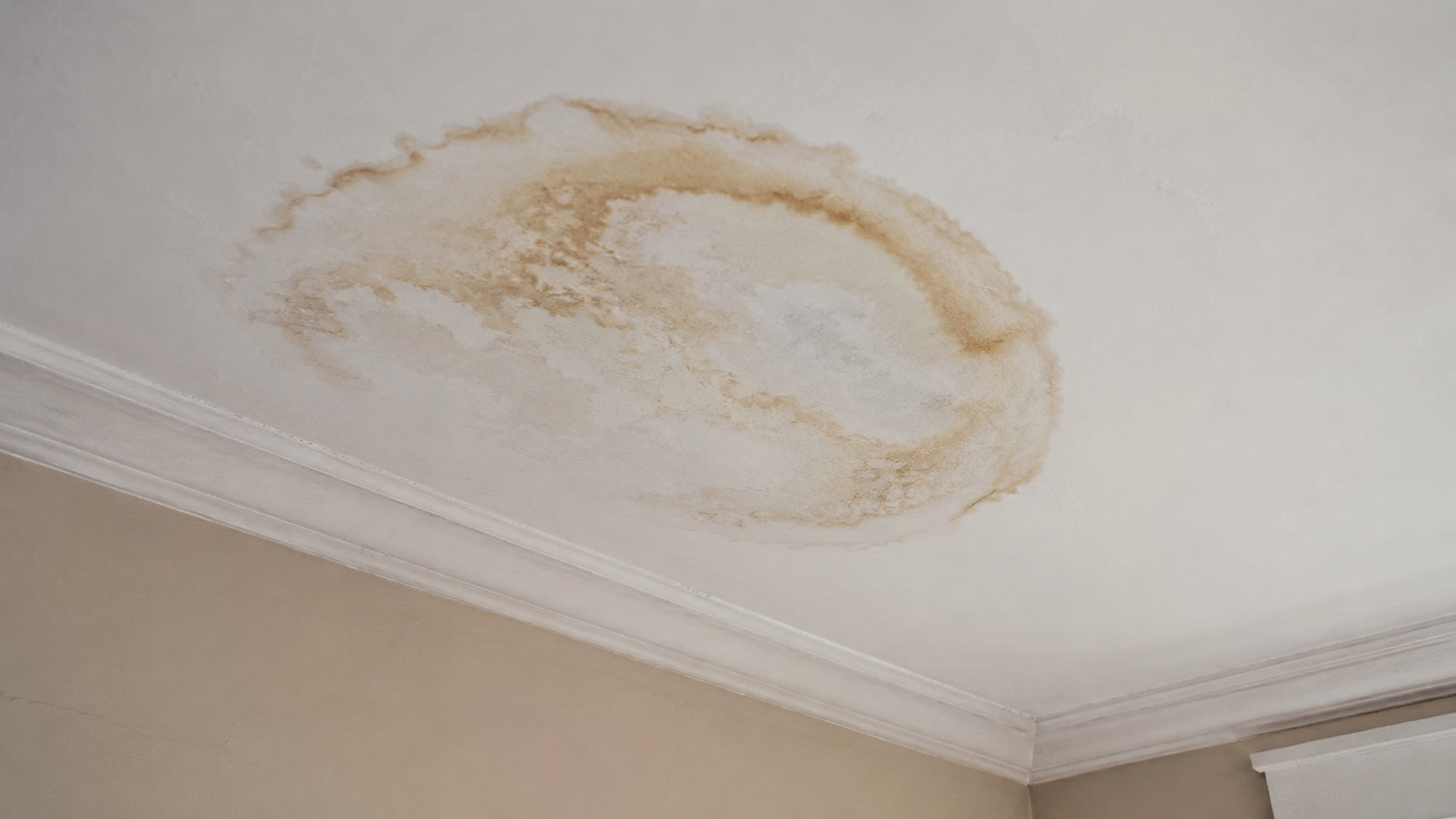
A water stain on the ceiling should be treated differently from normal yellowing. A brown or yellow ring with a clear edge often means water moved through wood, drywall paper, adhesive, or metal fasteners before drying. As the water evaporates, it leaves material behind at the edge of the stain. That is why the outside of the ring is usually the darkest part.
Grey, black, or fuzzy staining is a different concern. That may point to mold, which needs to be cleaned and handled before any primer or paint goes over it. A grey, greasy-looking mark on a kitchen ceiling may not be water at all. It may be soot, grease, or residue from cooking and poor ventilation.
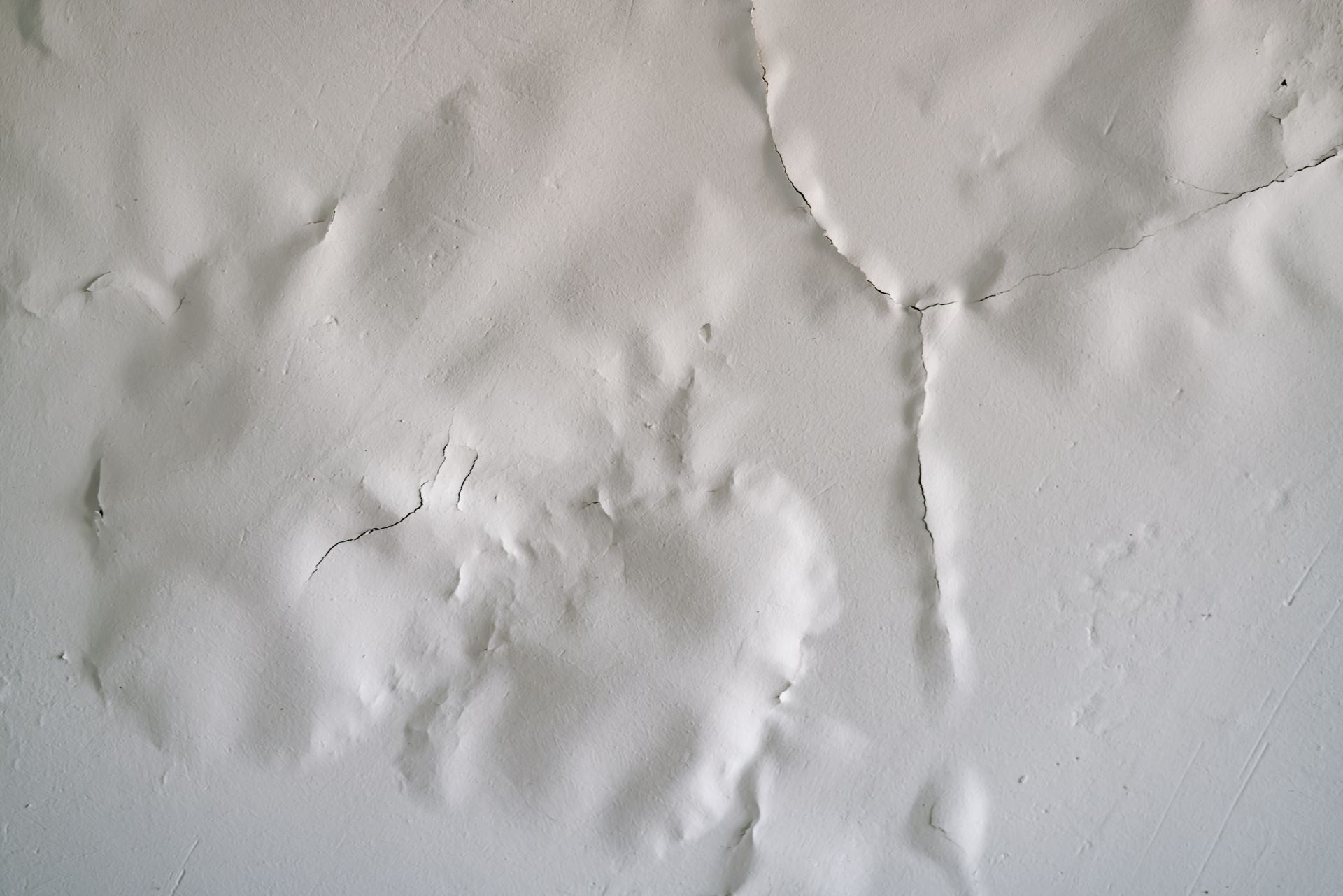
Painting directly over a water stain usually does not work. Most ceiling paint is water-based, and that moisture can reactivate what is left in the stain. As the paint dries, the stain can move back up through the new coat and show on the surface again. More coats do not always solve it because each coat adds more moisture.
The fix has to happen in the right order. The leak or moisture source needs to be repaired first, and the ceiling needs to dry fully before paint work begins. A moisture meter is the best way to confirm that the area is dry. Once the surface is dry and there is no mold concern, the stain can be sealed with a shellac-based primer or an oil-based stain blocker. If the primed area still looks yellow, the final coat will likely show it too.
Spot repair can take care of the stain, but spot painting the ceiling color often leaves a visible patch. Ceilings catch light from windows and fixtures, which makes changes in sheen, texture, and age more noticeable. For the cleanest result, the stain is sealed first, then the ceiling is repainted from wall to wall in that room. Ceilings do not need to match from room to room.
In Greater Hartford, many late-winter ceiling stains near exterior walls are not caused by plumbing. They can come from ice dams. Snow melts on a warm roof, refreezes near the cold eaves, and pushes water back under the shingles. If a stain appears in February or March within a few feet of an exterior wall, that is one of the first things to check.
The Ceiling Painting Process, Step by Step
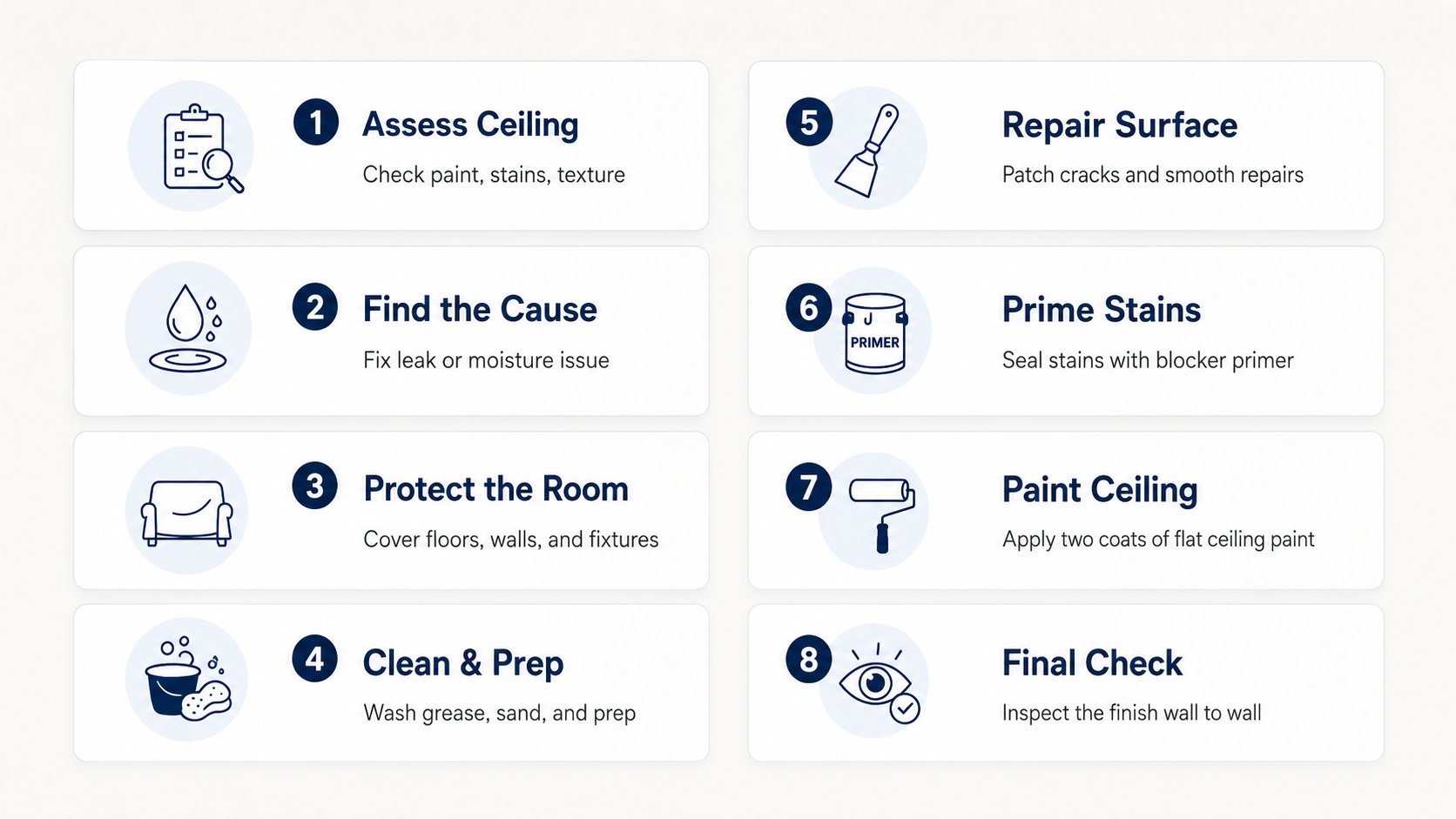
A ceiling repaint starts with a close look at the surface. Capital Painters checks the age of the paint, the type of ceiling, the texture, the stain pattern, and whether the surface is drywall or plaster. Older 1920s and 1930s colonials with plaster ceilings may crack differently than newer drywall ceilings, so the repair approach can change.
If there is a water stain, the source has to be addressed before painting begins. That may mean a roof issue, plumbing leak, ice dam, or another moisture problem. The area also has to be fully dry. Painting over an active stain may look better for a short time, but the mark can return if the source was never corrected.
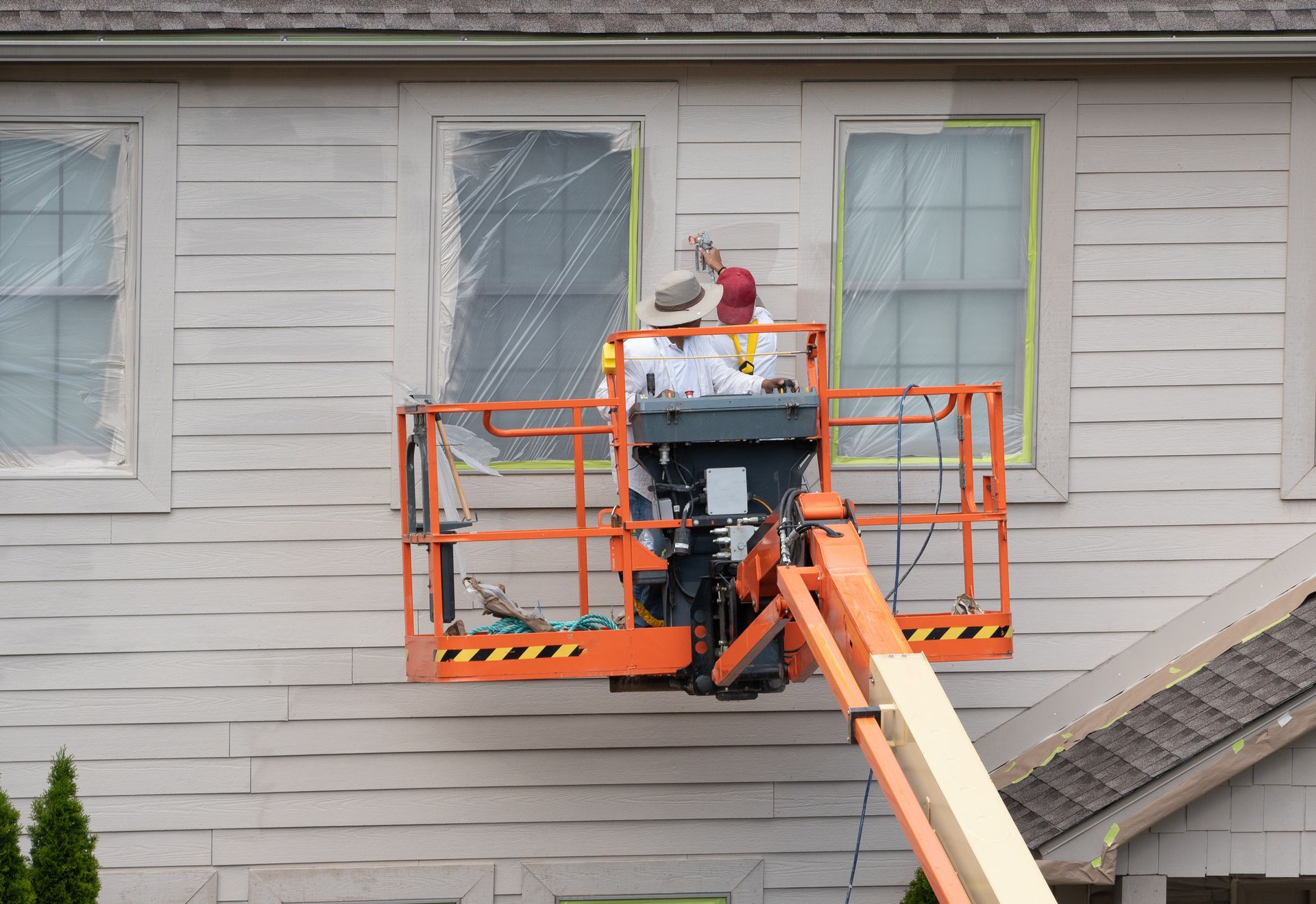
Protection matters because ceiling work is messy by nature. Floors, walls, furniture, and fixtures need to be covered before work starts. Fixtures may be removed or carefully protected, and dusty prep work should be controlled so debris does not move through the rest of the home.
Cleaning and repair come next. Kitchen ceilings may need degreasing so primer can bond properly. Cracks, nail pops, loose tape, and old patches need to be repaired and sanded smooth. Stains are sealed with the right primer, and bare or patchy ceilings may need a full prime coat. Most ceilings are finished with two coats of flat ceiling paint because flat paint hides surface variation better than paint with sheen.
Popcorn Ceilings: What Connecticut Homeowners Should Know
Popcorn ceilings, also called textured or acoustic ceilings, were common in homes from the 1950s through the 1980s. Builders used them because the texture was quick to apply, helped hide imperfections, and added some sound dampening. Many mid-century ranches and split-levels in Connecticut still have this type of ceiling.
The important issue is asbestos. You cannot confirm asbestos by looking at a ceiling. The only reliable way to know is laboratory testing of a sample collected by a licensed professional. Connecticut homeowners with textured ceilings in homes built before roughly 1980 should have the material tested before scraping, sanding, removal, or renovation work begins.
Connecticut requires asbestos work over certain size thresholds to be handled by licensed asbestos contractors. The Connecticut Department of Public Health licenses and regulates asbestos contractors and consultants, and asbestos waste cannot be treated like regular household trash. Capital Painters does not perform asbestos testing or asbestos abatement. Once the material has been tested and cleared, or once abatement has been completed by the proper licensed contractor, painting and finish work can move forward.
Homes built before 1978 can also involve lead paint rules. Work that disturbs painted surfaces in those homes may need to follow EPA RRP lead-safe practices, which is why it helps to understand lead paint in older Connecticut homes before starting ceiling or interior painting work.
When asbestos is present, removal may not be the best option. Skim-coating or installing new drywall over the texture can sometimes create a smooth finish without disturbing the material. Testing comes first because it determines what is safe, legal, and practical.
How Popcorn Ceiling Removal Works After Testing
Popcorn ceiling removal should only move forward once testing confirms that asbestos is not present. The room is sealed with plastic, fixtures are removed or protected, and vents are covered so dust stays contained. The texture is usually misted and given time to soften before scraping. Dry scraping creates more dust and can damage the surface underneath.
After the texture is removed, the ceiling almost always needs repair. Popcorn texture often hides seams, old patches, uneven areas, and tape lines. Those areas are repaired, skim-coated, sanded, and primed before the finish paint goes on. Fresh joint compound and exposed drywall absorb paint unevenly, so primer is what helps the final coat look consistent.
A painted popcorn ceiling is harder to remove because the paint keeps the texture from absorbing moisture. In those cases, removal may take much more labor, and skim-coating or covering the ceiling may be the better route. The right approach depends on the test results, the condition of the texture, and how smooth the homeowner wants the finished ceiling to look.
Ready to Fix a Stained, Yellowed, or Textured Ceiling?
A good ceiling repaint starts with understanding what caused the problem. Yellowing, water stains, smoke, grease, plaster cracks, and popcorn texture all need the right prep before the final coat goes on.
Capital Painters provides interior painting services for homeowners throughout Hartford County and surrounding Connecticut communities, including West Hartford, Wethersfield, Newington, Suffield, Glastonbury, Avon, and Simsbury. For help planning the right approach, request a free estimate. You can also learn more about what interior painting costs or how to avoid common interior paint problems before starting your next project.